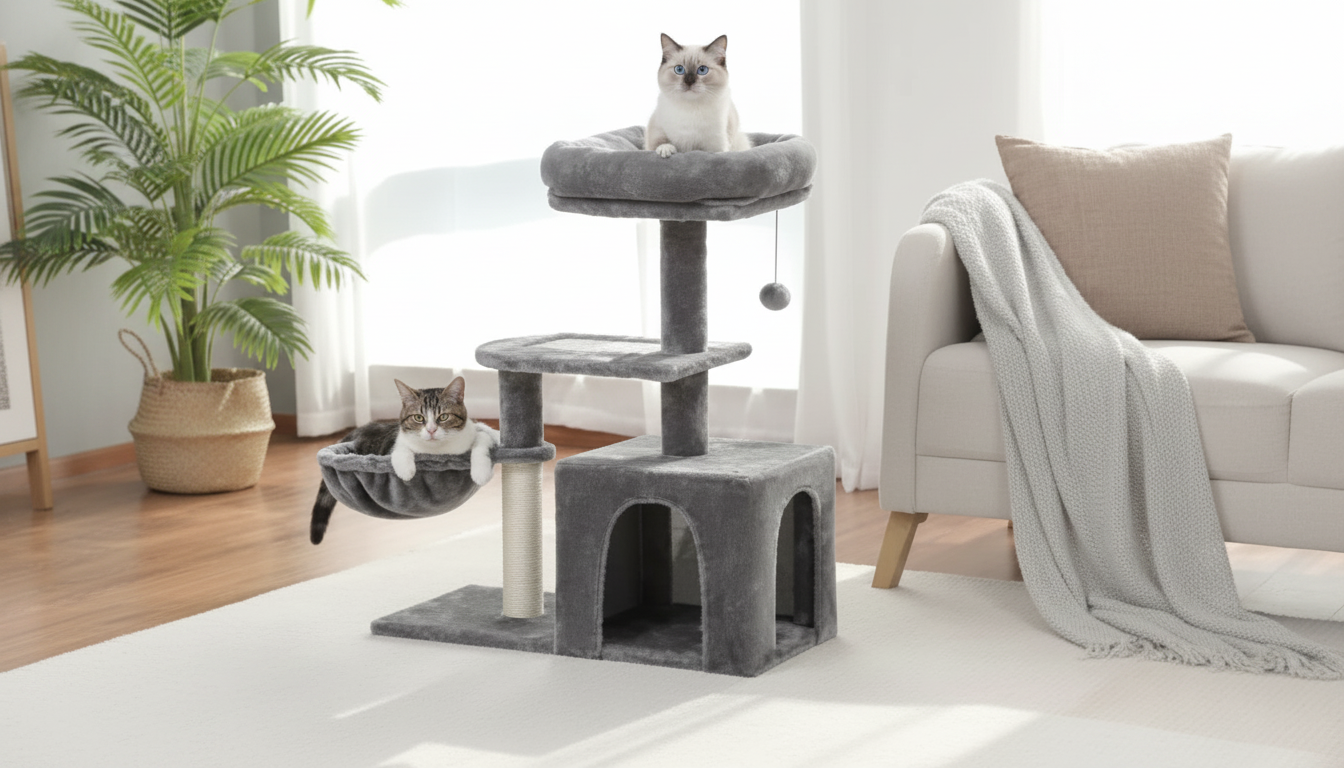
A compact, multi-level cat tree can turn a small indoor space into a vertical playground—offering a cozy condo for hiding, a hammock for lounging, and scratching posts that help protect furniture. The right setup adds climbing, resting, and scratching options without crowding your floor plan, and it can make daily routines calmer for both cats and people.
Indoor cats thrive when they can climb, perch, and retreat—especially in apartments and smaller rooms where “territory” feels limited. A multi-level design turns unused airspace into usable cat space.
For more on why enrichment, resting zones, and predictable spaces matter, the American Association of Feline Practitioners (AAFP) environmental needs guidelines are a helpful reference point.
Not all “small cat trees” are built the same. The details—entrance size, hammock depth, post height, and platform spacing—are what determine whether your cat uses it daily or ignores it.
| Part | Best for | What to check |
|---|---|---|
| Condo | Hiding, quiet rest | Stable base, easy-to-clean interior, entrance size |
| Hammock | Deep naps, lounging | Secure attachment, weight tolerance, firm seams |
| Upper platforms | Perching, observing | Non-slip feel, edge comfort, spacing between levels |
| Scratching posts | Stretching, nail care, marking | Post height, wrap tightness, base stability |
| Base | Overall safety | Footprint, anti-tip stability, floor grip |
For small cats, “fit” is about more than overall height. Platform depth, step distance, and how the tree handles quick jumps all affect confidence and safety.
A cat tree works best when it’s placed where your cat already wants to be. When placement matches your cat’s routines, the tree becomes a default hangout instead of a piece of décor.
If you’re addressing scratching specifically, the ASPCA’s cat behavior resources offer practical tips on redirecting behavior with consistency and setup.
If you want an all-in-one vertical “home base,” consider the Multi-Level Plush Cat Tree for Small Indoor Cats with Condo, Hammock & Scratching Posts. It’s designed to deliver multiple zones in one footprint—upper perches for observing, an enclosed condo for downtime, a hammock lounge for deep naps, and scratching posts to help redirect clawing to the right place.
In multi-cat homes (or in studios where floor space is tight), pairing a compact cat tree with vertical wall territory can reduce crowding and keep cats from competing for the same top spot. If you want to expand upward without expanding the base, the Wall Mounted Cat Shelves Set can complement a cat tree by creating extra perches and pathways along the wall.
Most cats rotate between enclosed and open rest spots depending on mood, noise level, and temperature. Encourage use by adding a familiar blanket to the condo and placing treats or a toy on the hammock during the first week.
Place the tree near the furniture being scratched and reward your cat immediately for using the posts. Posts also need to be tall and stable enough for a comfortable full-body stretch, or many cats will keep choosing the couch.
A window-adjacent corner often works best because it provides a view while keeping the base out of walkways. Avoid loud or high-traffic areas that can make the condo feel unsafe or disrupt naps.










Leave a comment