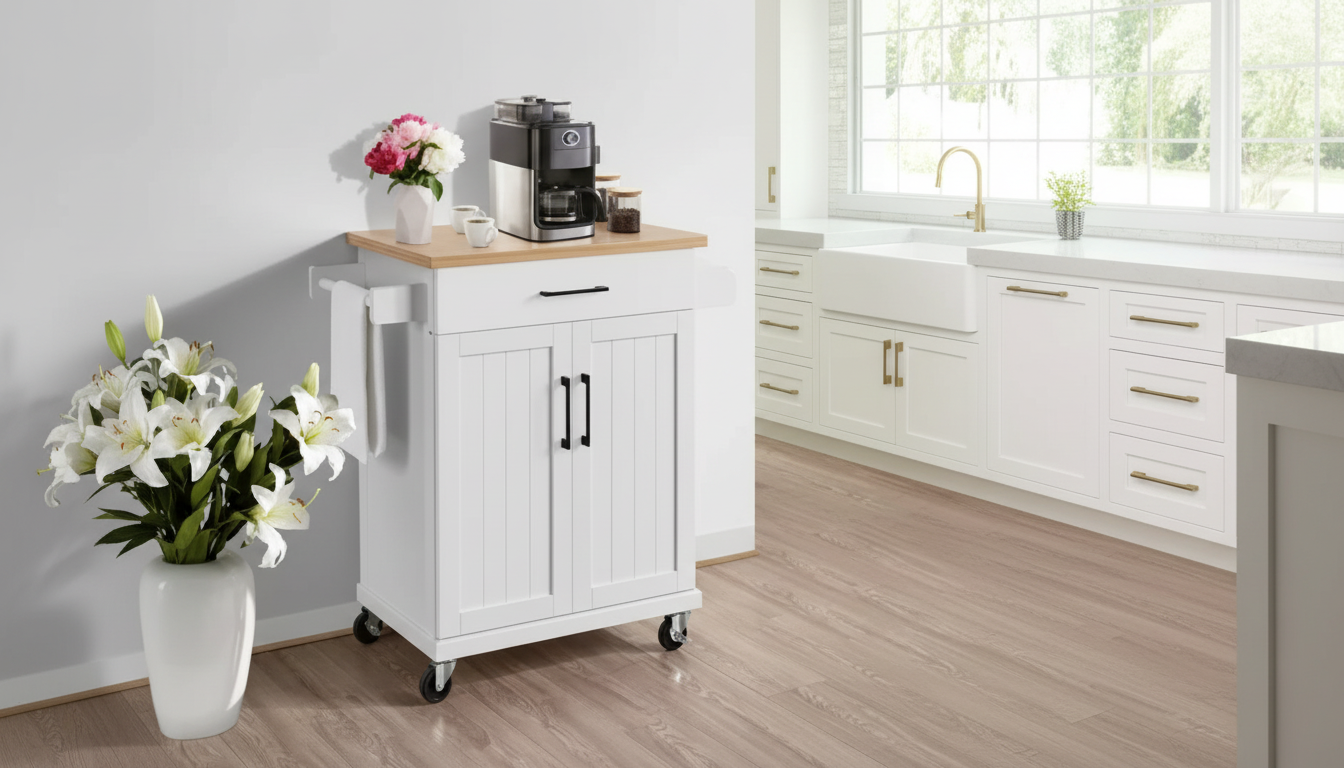
A well-designed kitchen cart can add counter space, organize utensils and pantry items, and keep everyday tools close at hand—without remodeling. When you choose a cart with a drawer and smart storage below, it can function like a flexible prep station that rolls where you need it and “parks” neatly when you don’t. Below is a practical guide to what to look for, where it fits best, how to set it up for smoother workflow, and how to keep it stable and easy to clean.
A cart with a dedicated drawer does more than add a surface—it creates a repeatable routine for meal prep. Instead of spreading tools across the main counter, you can build a small “landing zone” that keeps your primary workspace clearer and your essentials consistently placed.
Not all carts feel the same in daily use. The most helpful models focus on stability, easy cleaning, and storage that matches how you cook (and how quickly you want to put things away).
Kitchen carts work best when they improve flow rather than create a pinch point. Before buying, measure where the cart will live and how it will move through your space—especially if you plan to roll it to the table or patio door.
| Area to measure | What to check | Practical tip |
|---|---|---|
| Cart footprint | Width × depth of the base | Tape the outline on the floor to visualize clearance |
| Drawer access | Space needed to pull the drawer fully | Confirm the drawer won’t hit appliances or cabinet handles |
| Door/cabinet swing (if any) | Room for opening without obstruction | Consider a location where doors can open at least 90° |
| Rolling path | Thresholds, rugs, tight turns | Choose locking casters and roll-test the route when possible |
| Working height | Comfortable height for prep | Aim for a height that matches nearby counters for seamless workflow |
Because a kitchen cart touches food, hot tools, and sometimes appliances, a simple maintenance routine helps it last and keeps your prep cleaner. For food-handling basics and cross-contamination prevention, see guidance from the USDA Food Safety and Inspection Service and the CDC. For general home safety reminders, the CPSC safety guides are a helpful reference.
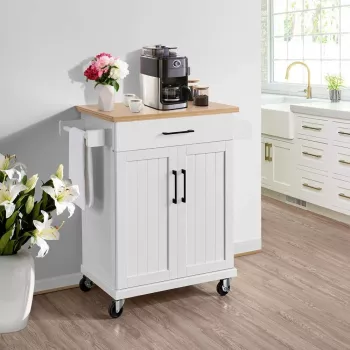
If you want an everyday prep helper that also cleans up fast, Kitchen Cart with Drawer & Storage is built to add extra countertop space plus a dedicated drawer for utensils and small essentials. It’s a practical fit for apartment kitchens, meal-prep corners, or overflow storage when cabinets are full, and it can roll into a coffee setup, baking station, or serving role when guests arrive.
| Item | Current price | Availability |
|---|---|---|
| Kitchen Cart with Drawer & Storage | $131.17 | In stock |
Yes—locking casters reduce sliding while you chop, knead, or operate small appliances. Two locking wheels can help, but four locking casters typically feel the most secure; keep them locked during prep and unlock only when repositioning the cart.
Use the drawer for small, daily tools and wraps you want clean and immediately reachable, like measuring spoons, peelers, scissors, and plastic wrap. Put heavier cookware and appliances on shelves—especially the lower shelf—to improve stability and make the cart easier to roll.
Check the manufacturer’s stated limits for the top and each shelf, then leave a safety margin for real-life use. Place the heaviest items low to reduce wobble, and periodically re-tighten fasteners because rolling vibration can loosen hardware over time.










Leave a comment