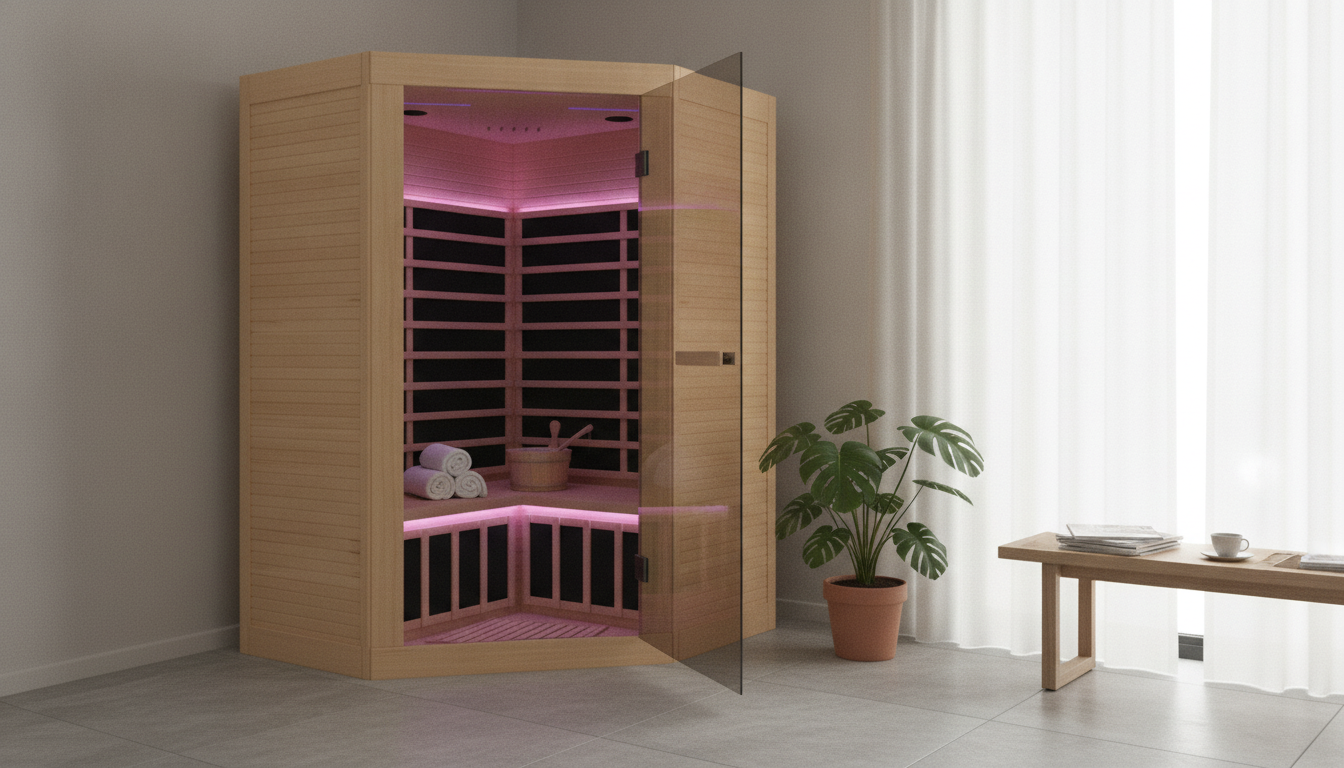
A 2–3 person corner infrared sauna is built to make the most of a room’s “forgotten” real estate—an open corner—while still giving two adults a comfortable place to sit and warm up together. If you’re trying to add an at-home heat routine in a bedroom, basement, or home gym without committing to a boxy cabin floating in the middle of the floor, the corner layout can feel surprisingly natural.
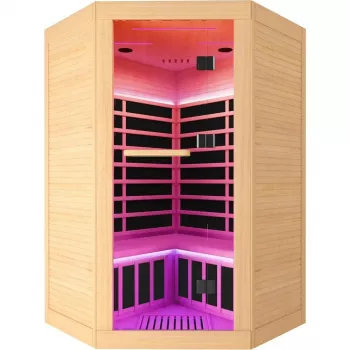
The biggest difference is the footprint. A corner design uses two walls, which often keeps walking paths and doorways clearer in tighter rooms. Many corner units also use angled front panels, which can improve sightlines and make it easier for two people to share the bench without feeling like you’re facing a wall.
Corner placement is often simpler in multipurpose spaces where you don’t have a long uninterrupted wall—think home gyms with mirrors, bedrooms with dressers, or basements with support posts. Another practical perk: a corner shape can reduce “dead space” behind the unit compared with a rectangular sauna that has to be pulled away from the wall for door clearance.
A little measuring upfront prevents most installation headaches later. Before you order, map out the corner as if you’re placing a large piece of furniture: verify the walls, ceiling, door swing, and the route the panels will take during assembly.
| Item to measure | Why it matters | What to confirm |
|---|---|---|
| Corner wall width | Determines whether the cabin fits without blocking outlets or trim | Enough width on both walls for the full base and front panel |
| Ceiling height | Ensures the roof clears and heat can circulate properly | Minimum ceiling height plus a little working space for assembly |
| Door clearance | Prevents hitting nearby furniture or walls | Door can open fully and safely |
| Floor levelness | Avoids panel gaps and poor door alignment | Flat surface or leveling solution if needed |
| Electrical access | Avoids extension-cord workarounds | Outlet/circuit location matches the sauna’s cord reach and requirements |
Infrared comfort is less about chasing the highest temperature and more about steady, balanced coverage. Heater type and placement influence whether sessions feel even across your back, sides, and legs—or whether you end up shifting around to “find the warm spot.”
Corner cabins rely on tight panel alignment to keep the structure solid and the door operating smoothly. A square, well-joined build feels sturdier under daily use and typically holds warmth more efficiently than panels that flex or drift out of alignment.
Sweating can feel cleansing, but it’s not a replacement for hydration—plan to drink water before and after. Results vary by individual, and consistency plus safe use tends to matter more than pushing intensity. For an overview of benefits and cautions, see Harvard Health Publishing’s discussion of sauna use (Sauna use: Benefits and risks) and Mayo Clinic’s consumer guide (Sauna: Possible health benefits).
For broader guidance on safe complementary health practices, NCCIH provides helpful context (Complementary approaches and safety considerations).
For a simple home “recovery corner,” some households also like small quality-of-life add-ons—such as a nearby slideshow display for relaxing visuals between sessions (10.1” WiFi Digital Photo Frame) or wall storage that keeps the floor clear for towels and water (Wall Mounted Cat Shelves Set), especially in compact rooms.
Measure both walls of the corner, confirm ceiling height and door swing clearance, and leave the small perimeter gap recommended by the manufacturer. Also plan for a level, supportive floor and electrical access that matches the sauna’s cord reach and power requirements.
Start with about 10–20 minutes at a moderate setting, then increase time and/or temperature gradually based on comfort. Hydrate before and after, and end the session if you feel lightheaded, nauseated, or unwell.
Many people tolerate sauna heat well, but some should consult a clinician first—especially if pregnant, managing cardiovascular conditions, prone to fainting/low blood pressure, or taking medications that affect heat tolerance. Stop use and cool down if dizziness, headache, nausea, or unusual discomfort occurs.









Leave a comment