
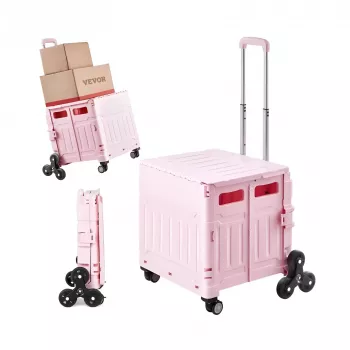
Yes—stair climbing carts can really work, but their performance depends on the wheel design, the load, and the type of stairs. Models with tri-wheel “stair climber” sets (three small wheels rotating around a hub) are the most common, and they’re designed to roll up step edges more smoothly than standard two-wheel carts. For many shoppers, they reduce strain when hauling groceries, laundry, packages, or small appliances on stairs.
On typical indoor staircases with consistent step height, a well-built stair climbing cart can help distribute weight and reduce the need to fully lift the load. The rotating wheel cluster can “walk” over each step edge, which often feels steadier than trying to bump a regular dolly up one riser at a time. They’re especially handy for medium-weight loads that would otherwise require multiple trips.
They’re not magic on every staircase. Narrow treads, steep angles, uneven outdoor steps, high lips, or worn edges can make the motion jerky. Very heavy loads can still be difficult, because you’re managing both gravity and leverage—if the handle angle is awkward or the frame flexes, you’ll feel it. Small hard wheels may also be noisy and can scuff delicate surfaces if you’re not careful.
Check the rated capacity (and stay comfortably under it), look for sturdy frame materials, and confirm the wheel size and tri-wheel construction are meant for stairs (not just for looks). A longer handle and stable base plate generally improve control. If you’ll use it outdoors, prioritize durable wheels and a frame that won’t twist under load.
For a deeper breakdown of designs, pros/cons, and what to look for, see the full guide here: https://primefavesboom.shop/do-stair-climbing-carts-really-work/.
They can be, but choose a cart with non-marking wheels and move slowly to avoid scuffs. If the wheels are hard plastic, consider adding protective stair tread covers or using a different route for delicate finishes.










Leave a comment