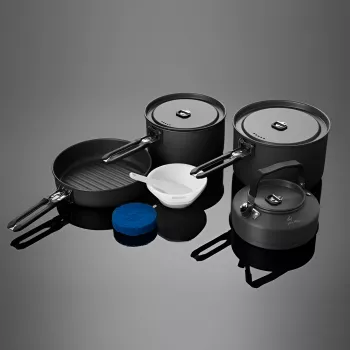
A compact cookware kit can make camp meals faster, cleaner, and more enjoyable—especially when the essentials nest together and cover boiling, frying, and serving. A simple loadout like a pot, kettle, frying pan, and bowls helps keep cooking predictable whether you’re setting up at a campsite, pulling over on a road trip, or stocking an emergency tote for power outages.
Instead of piecing together mismatched gear, a coordinated set streamlines the basics: heat water, cook a quick meal, and portion it out without digging through extra containers. For campers who like simple menus and quick cleanup, that consistency matters as much as the food.
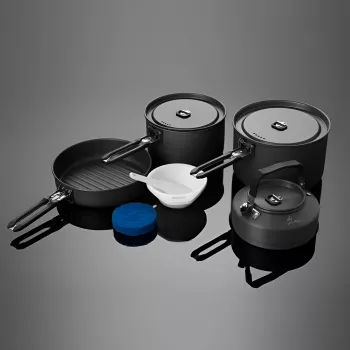
This 4-piece style kit focuses on the core cookware most campers reach for first. Each piece covers a specific job, and the overall concept is to nest and pack down to reduce bulk.
| Piece | Best For | Tips at Camp |
|---|---|---|
| Pot | Boiling water, soups, pasta, rice | Use a lid (if included) to speed boil; stir to prevent sticking |
| Kettle | Hot drinks, quick water heating | Warm water for cleanup after meals; avoid boiling dry |
| Frying pan | Eggs, pancakes, sautéed meals | Preheat briefly; use moderate heat to reduce scorching |
| Bowls | Serving meals, snacks, prep | Keep one bowl for dry ingredients to minimize dishwashing |
Camp cooking usually rewards simple techniques: steady heat, shorter ingredient lists, and tools that do one job well. With a pot, kettle, and frying pan in rotation, it’s easy to build a repeatable meal plan that doesn’t stall out at dinnertime.
For higher-risk foods like poultry, a thermometer adds confidence. USDA guidance on safe minimum internal temperatures is a helpful reference when planning meals away from a full kitchen (USDA FSIS safe temperature chart).
A nested cookware set shines when your storage space is limited or you’re trying to keep a camp kitchen from turning into a jumble of loose items. When pieces stack together, packing is faster and teardown is less frustrating.
For a cleaner campsite and better outdoor etiquette, follow local rules for dishwater disposal and waste handling. Leave No Trace’s guidance on disposing of waste properly is a solid baseline (Leave No Trace principles).
When cooking on a small burner or uneven picnic table, comfort features matter. The goal is to reduce spills, prevent burns, and keep the workflow smooth from boil to serve.
Yes—this style of cookware is typically used on portable backpacking or tabletop stoves. For best control, set the stove on stable, level ground and use moderate heat to prevent scorching and improve simmering.
It’s best suited for solo campers or pairs, depending on portion sizes and the type of meals you’re making. The bowls make splitting servings easier, while the pot can handle simple shared soups, grains, or noodles.
Wipe out leftover residue first, then wash with a small sponge and a tiny amount of soap, using minimal rinse water. Dispose of strained dishwater properly according to local campsite rules to keep the area clean.







Leave a comment