
Burnout rarely appears overnight. Subtle shifts in sleep, focus, mood, and workload patterns often show up first—yet they can be easy to dismiss until exhaustion becomes the norm. AI-assisted tracking can help surface these early changes as patterns, giving a clearer moment to pause, adjust, and seek support before stress becomes chronic.
Early burnout signals are often “explainable” in isolation: a busy week, a rough night, an unusually demanding project. What makes them meaningful is repetition and drift over time.
Burnout is recognized as an occupational phenomenon by the World Health Organization (WHO). If symptoms persist or worsen, it’s worth bringing them to a qualified professional—especially when daily functioning is affected.
Human intuition is strong at noticing major changes, but it can struggle with slow trends. AI tools—used thoughtfully—can act like a “pattern mirror” that reflects what’s happening across weeks instead of hours.
For broader guidance on stress and coping, the American Psychological Association (APA) and NIOSH (CDC) provide practical, evidence-informed resources.
AI tracking works best when the inputs are simple, consistent, and not overly personal. The goal is to notice direction—not achieve perfect measurement.
| Early signal | What it can look like | Data sources (examples) | First step when it rises |
|---|---|---|---|
| Sleep disruption | Shorter sleep, more wake-ups, later bedtime drift | Wearables, phone sleep estimate, manual log | Protect a consistent wind-down window; reduce late caffeine |
| Rising workload intensity | More late hours, fewer breaks, weekend spillover | Calendar patterns, time tracking, to-do completion | Add protected breaks; renegotiate deadlines or scope |
| Reduced focus | More context switching, rereading, slower tasks | App/site usage, pomodoro logs, self-rating | Batch tasks; cut notifications; schedule deep work blocks |
| Mood volatility | Irritability, anxiety spikes, emotional flatness | Quick daily mood check-in, journaling prompts | Name stressor; add recovery activity; consider talking to a professional |
| Withdrawal | Fewer social plans, shorter conversations, avoiding meetings | Habit logs, calendar attendance, self-check | Plan one low-effort connection; ask for support |
| Physical strain | Tension headaches, GI issues, more colds | Symptom notes, recovery score (if available) | Prioritize rest; consult clinician if persistent or severe |
A lightweight workflow prevents tracking from becoming another stressor. Keep it brief, repeatable, and focused on decisions.
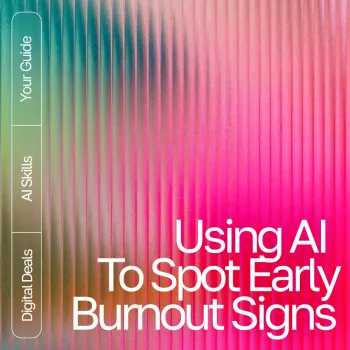
For a structured, low-friction way to build awareness without turning life into constant measurement, Using AI to Spot Early Burnout Signs (Digital eBook) is designed as a practical guide for recognizing early signals and translating them into recovery actions. It includes check-ins, indicator lists, and weekly decision prompts that keep the focus on what to change next—not on perfect tracking.
Creating a calmer environment can also support recovery habits. Consider small quality-of-life upgrades like a 10.1” WiFi Digital Photo Frame for a quick mood lift through meaningful photos, a Wall Mounted Cat Shelves Set to help pets stay enriched (and reduce household friction), or a Wooden Toy Refrigerator Play Kitchen Set with Accessories for Kids to encourage independent play during short recovery breaks.
No. AI can highlight patterns and risk signals that may be consistent with rising stress, but diagnosis and treatment decisions belong to qualified professionals.
A small, consistent set usually works best: sleep duration/quality, a daily stress rating, workload intensity (hours or tasks), and one recovery habit. Look for trends over 2–3 weeks rather than judging single bad days.
It can be, but privacy matters. Keep sensitive content local/offline when possible, choose tools with clear data policies, and avoid workplace-monitored channels for personal health tracking.










Leave a comment