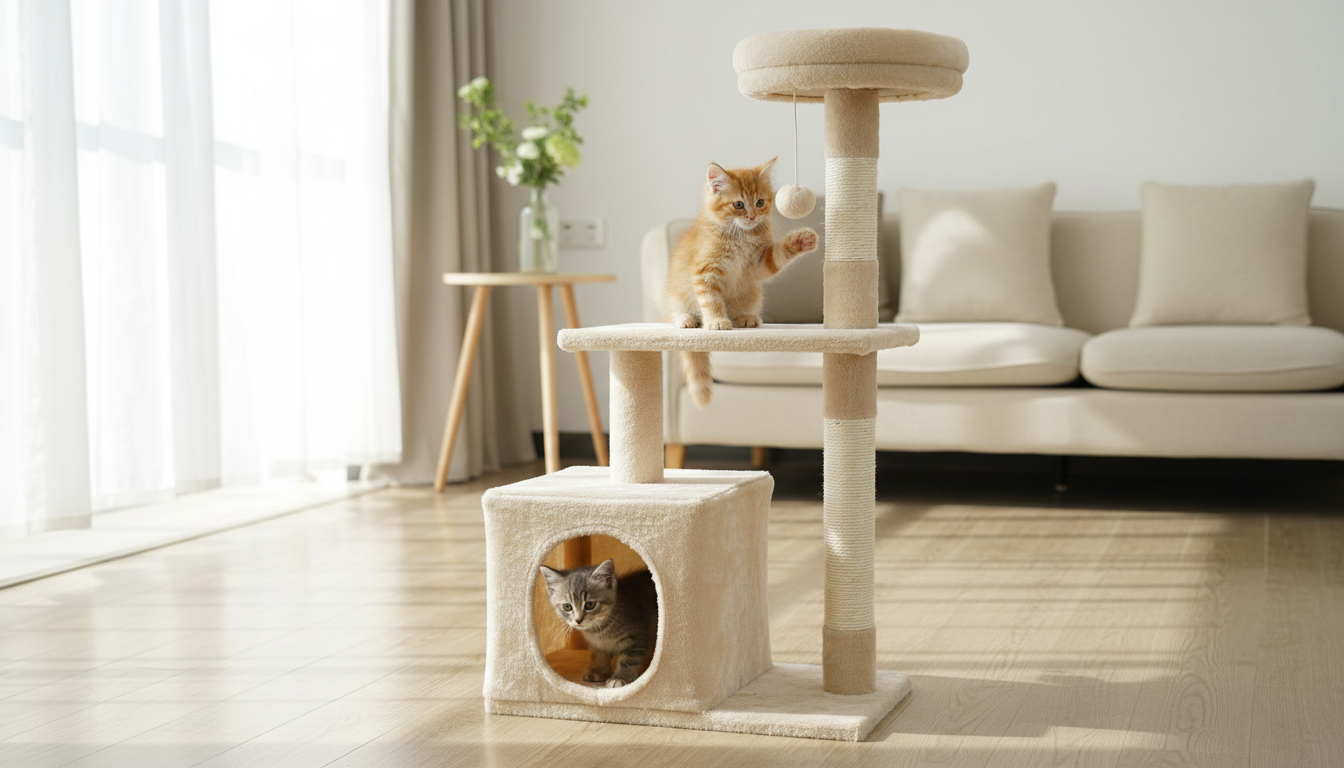
A compact cat tree with a sisal scratching post gives kittens and smaller cats a dedicated place to scratch, climb, perch, and nap—without dominating your living space. The most kitten-friendly designs keep step-up heights manageable, provide a stable base for wobbly “zoomies,” and use scratch-worthy materials that pull attention away from sofas and rugs while keeping daily play and rest in one familiar, comforting spot. For more guidance, see Small Cat Tower With Perch, Bed, Sisal Scratching Posts ….
Kittens thrive on repetition: scratch, pounce, climb, rest, repeat. A small cat tree helps turn that cycle into a healthy habit by offering one consistent “station” for the behaviors cats naturally want to practice. For further reading, see Our Cat’s Favorite Climbing Tree.
For many kittens, a compact tree is also a “reset zone”—a place to retreat after loud noises, guests, or high-energy play. That sense of control over their space often shows up as calmer behavior elsewhere.
Sisal is one of the most reliable scratching materials because it has a coarse, fibrous texture that creates satisfying resistance. Many cats prefer it over fabric-only posts or smoother rope because their claws can “grab” and pull without slipping.
| Surface | Best for | Watch for |
|---|---|---|
| Sisal rope | Most cats; strong traction and stretch scratching | Loose wraps, big gaps, rapid fraying |
| Sisal fabric | Uniform grip; can be quieter than rope | Thin fabric layers that peel |
| Carpet | Cats that already scratch rugs | Can reinforce carpet-scratching habits elsewhere |
| Cardboard | Lightweight; great for horizontal scratching | Short lifespan; creates litter-like debris |
When the goal is everyday use, the “best” small cat tree is the one your kitten feels confident using from day one. Prioritize safety and comfort first, then think about extras.
If your kitten is especially energetic, consider placing the tree on a non-slip mat. If space allows, positioning it near a wall can also make the setup feel more secure when they launch onto it at full speed.
Great placement is often the difference between a cat tree that gets ignored and one that becomes the favorite spot in the house.
For deeper behavior guidance, the ASPCA’s scratching behavior overview is a helpful reference. Many households also find that providing appropriate scratch options can reduce pressure to consider harmful alternatives; the AVMA’s declawing position explains why scratching outlets are important for welfare and behavior.
If you’re outfitting a kitten area or adding a starter tree to a small home, the Small Cat Tree with Sisal Scratching Post for Kittens and Small Cats is built around the basics that matter: a compact footprint, a dedicated vertical scratch surface, and an easy everyday setup for play and rest.
For cats that crave extra vertical territory but you’re short on floor space, pairing a small tree with wall verticals can expand their “cat highway.” Consider adding the Wall Mounted Cat Shelves Set to create step-up perches and lounging zones that keep climbing fun while freeing up your room’s footprint.
Place the tree near where your kitten already scratches, then reward any scratching on the post with praise, play, or a small treat. Use wand-toy play to guide your kitten onto the tree, and try catnip only if your kitten responds to it (many don’t until they’re older); redirect mistakes instead of punishing them.
Yes, if it has a wide base and you keep the hardware tightened, especially during the first few months. Put it on a non-slip surface, and for high-energy jumpers, placing it near a wall can make it feel steadier and more inviting.
Replace or rewrap the scratch surface when it’s heavily frayed, loose, or worn smooth and your cat stops using it. Also replace the unit if it still wobbles after tightening or if torn fabric creates snagging risks for claws.









Leave a comment