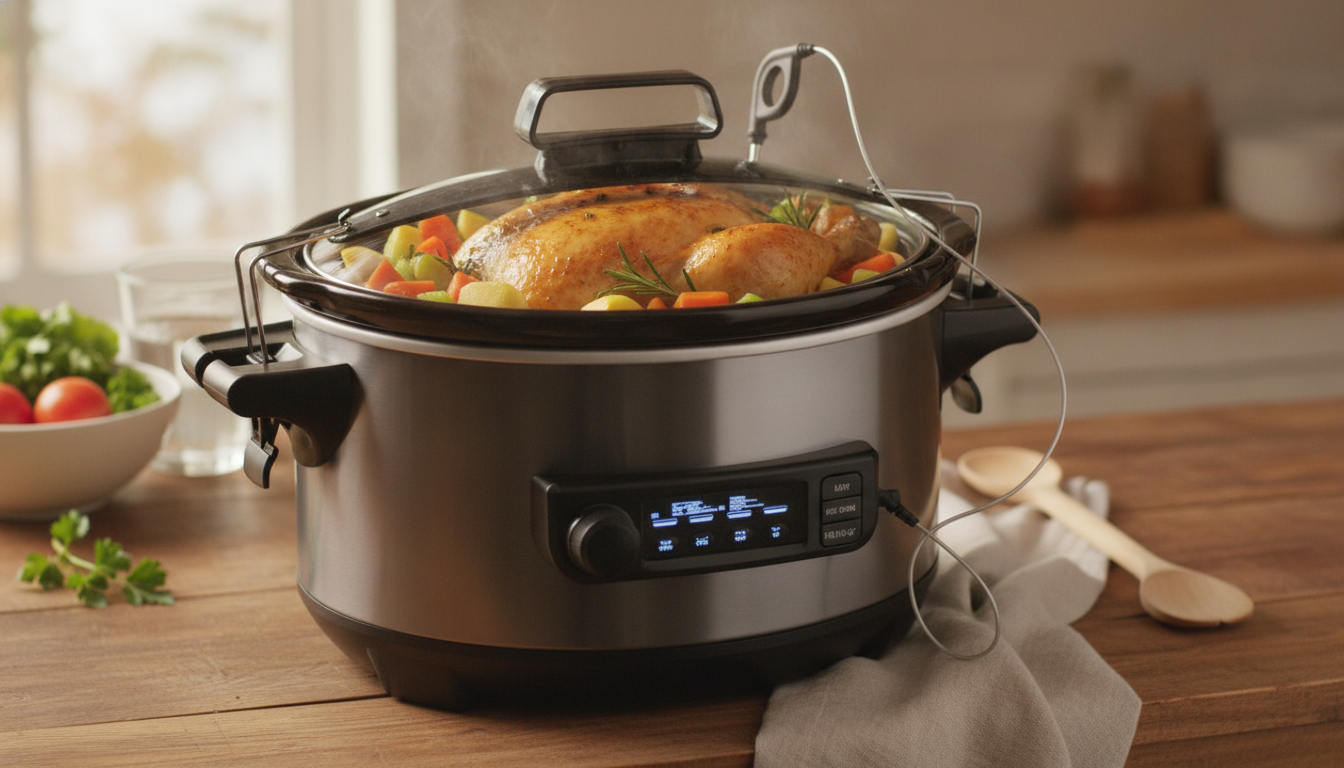
A 6-quart digital programmable slow cooker is built for set-it-and-forget-it meals: load ingredients, choose a time and heat setting, and let gentle, steady heat handle the rest. The 6-quart size hits a practical sweet spot for many households—large enough for family dinners and leftovers, but still easy to store and clean. Below you’ll find what this size is best for, how programmable controls change everyday cooking, and a few simple habits that help deliver safer, more consistent results.
A 6-quart slow cooker is a workhorse for everyday cooking and casual entertaining. It typically handles weeknight dinners, weekend meal prep, and potluck-friendly batches without forcing you to split recipes into multiple rounds.
For most recipes, the best performance comes from filling the crock about 1/2 to 2/3 full. Too little food can heat faster than expected and risk drying around the edges, while overfilling can slow cooking and make it harder for the center to reach a safe temperature.
This size is comfortable for big-batch soups and chili, many larger roasts, and chicken meals (including a whole bird, depending on the cooker’s shape). It also gives you room to layer ingredients for even cooking—think root vegetables on the bottom with proteins above.
| Food type | What 6 quarts commonly handles well | Notes for better results |
|---|---|---|
| Soup/Chili | A large batch for multiple meals | Leave headspace to prevent bubbling over; stir near the end if thickening |
| Pot roast/Stew | A family-size roast with vegetables | Brown meat first for deeper flavor; keep veggies in larger chunks |
| Chicken dishes | Large pieces or a whole bird depending on shape | Ensure thickest parts reach safe temperature; avoid overfilling |
| Beans/Lentils | Batch cooking for the week | Soak beans if desired; keep enough liquid as they expand |
Digital programmable slow cookers are designed to remove the mental math from dinner. Instead of guessing when to switch from “cook” to “keep warm,” you set a timed cook on low or high and let the cooker manage the rest (depending on the model’s features).
Low heat is typically best for tougher cuts that need time to break down. High heat can shorten the total cook time, but it’s still slow cooking—tenderizing takes hours, not minutes. Dense, thick foods (like large roasts or tightly packed beans) usually take longer than brothy soups or smaller pieces of meat.
| Dish | Low setting (approx.) | High setting (approx.) | Finish/serve tip |
|---|---|---|---|
| Chili or hearty soup | 6–8 hours | 3–4 hours | Add beans and corn later if preferred firmer; thicken at the end |
| Pot roast with vegetables | 8–10 hours | 4–6 hours | Add potatoes/carrots halfway if they tend to over-soften |
| Pulled pork | 8–10 hours | 4–6 hours | Shred, then return to sauce briefly to rewarm and absorb flavor |
| Chicken thighs in sauce | 5–7 hours | 3–4 hours | Add cream or cheese near the end to prevent splitting |
Use a food thermometer to confirm doneness—especially with poultry and large cuts. For official guidance on slow cooker safety and minimum internal temperatures, refer to USDA FSIS slow cooker recommendations and the USDA safe temperature chart. Leftovers should be cooled quickly and refrigerated promptly; reheat fully before serving. For broader time/temperature principles, the FDA Food Code is a reliable reference.
Check price and availability for the 6-quart digital programmable slow cooker.
| Item | Size | Type | Availability |
|---|---|---|---|
| 6 Quart Digital Programmable Slow Cooker | 6 quart | Digital programmable slow cooker | In stock |
For many households, yes—6 quarts is a comfortable family size for chili, soups, roasts with vegetables, and meal prep. Aim to fill the crock about 1/2 to 2/3 full for the most consistent cooking and best texture.
Yes, as long as you handle it safely: keep chicken refrigerated until cooking, avoid starting from frozen when possible, and cook until it reaches a safe internal temperature. Use a food thermometer to confirm doneness in the thickest part.
Slow cookers trap moisture, so recipes can end up thinner than stovetop versions—especially if you add too much broth or keep lifting the lid. Start with less liquid, keep the lid on, and thicken at the end with a cornstarch slurry or a brief reduction step if your recipe allows.










Leave a comment