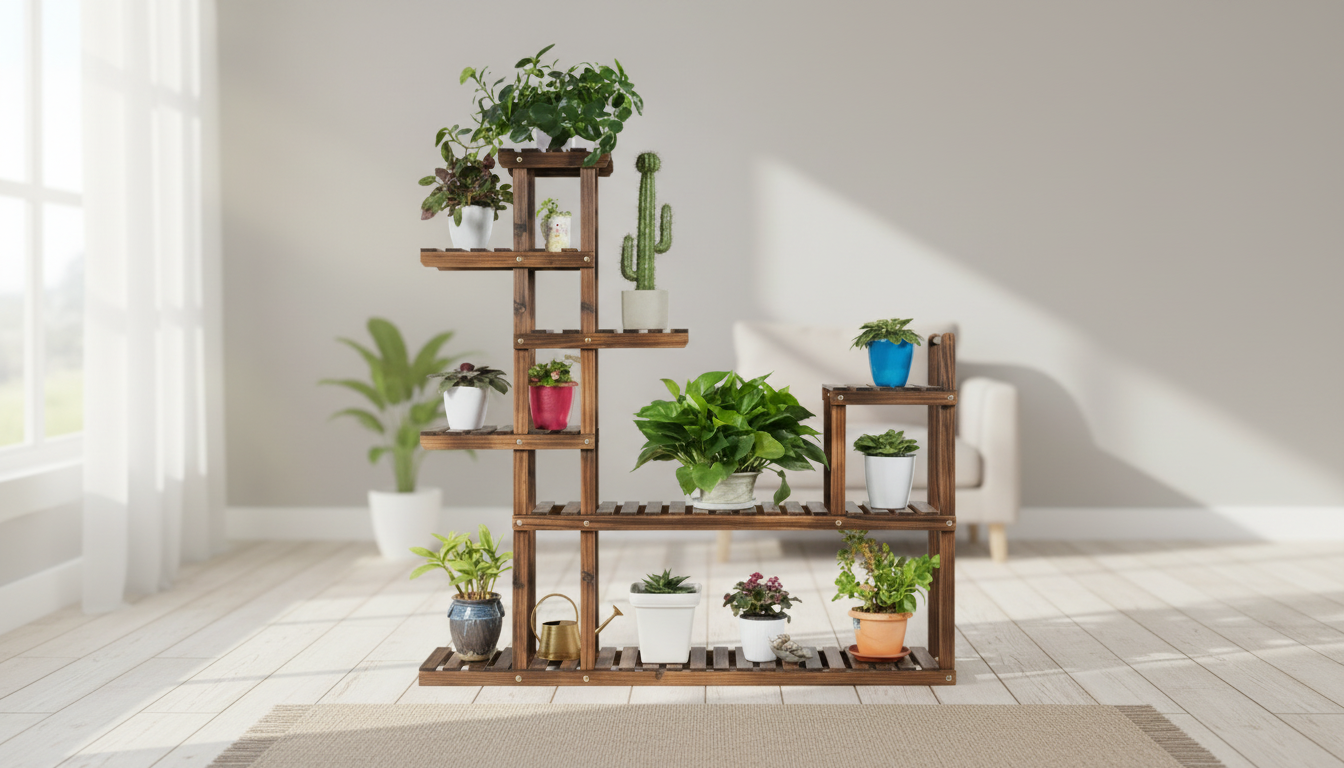
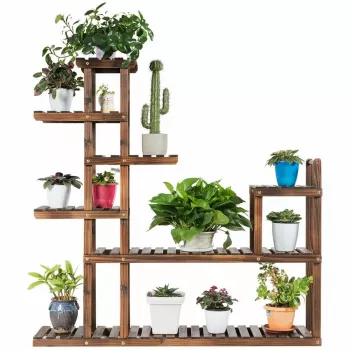
A tiered plant stand turns a crowded collection of pots into a clean vertical display, helping leaves get more light and keeping floors and windowsills uncluttered. This 7-tier solid wood design is built for compact corners and bright windows, offering multiple platforms for small-to-medium plants while keeping a warm, natural look that suits modern, boho, and minimalist spaces.
If plants are starting to “take over” your home, a 7-tier layout is a simple way to gain display space without committing to wider furniture. By stacking plants upward, the stand creates a dedicated spot for greenery that can feel calmer and more intentional than a row of pots spread across ledges and tabletops.
Solid wood plant stands are often chosen for their longevity and classic look. In day-to-day use, a sturdier frame can mean fewer replacements over time compared with lightweight plastic or thinner composite options. A natural wood finish also tends to “blend in” visually—so the plants, pots, and textures remain the focal point.
A 7-tier stand is most satisfying when it’s placed where plants naturally want to live—near light—while still staying out of the way. Before you assemble, decide whether the stand’s “best side” should face the room (for aesthetics) or face the window (for plant growth). In many homes, a slight angle between both is the sweet spot.
| Consideration | Best practice | Why it helps |
|---|---|---|
| Pot placement | Heaviest pots on the lowest tiers | Improves stability and reduces wobble |
| Water protection | Use saucers/drip trays on every shelf | Prevents moisture damage and floor stains |
| Light distribution | Stagger sun-lovers higher and shade-tolerant lower | Helps each plant get suitable light |
| Cleaning routine | Wipe down weekly; dry after spills | Reduces water marks and prolongs finish |
| Floor safety | Add felt pads or non-slip grips | Protects floors and improves traction |
If you’re ready to organize a growing plant collection in a compact vertical footprint, the Eco-Friendly 7-Tier Solid Wood Plant Stand is designed for bright corners, living rooms, and home offices. For best results, plan to pair it with drip trays on every tier to reduce water marks and keep the wood finish looking clean.
To complete a cozy corner, consider adding complementary vertical elements like the Wall Mounted Cat Shelves Set (helpful for redirecting curious pets away from pots) or a small décor accent like the 10.1” WiFi Digital Photo Frame nearby for a more personalized, lived-in space.
It depends on pot diameter and how wide each plant grows, but most setups use one pot per tier. If your plants have broad leaves or trailing vines, leaving extra breathing room improves airflow and makes the stand look less crowded as plants fill out.
It can work on a covered patio or balcony when kept out of direct rain and harsh sun. Use saucers, avoid soaking the wood, and bring it indoors during storms or freezing temperatures to help prevent warping and finish wear.
Use drip trays or saucers on every tier, wipe spills quickly, and add thin liners if you water frequently. Periodically check for pooled water, and consider re-sealing down the line if the finish starts to look worn in high-contact areas.










Leave a comment