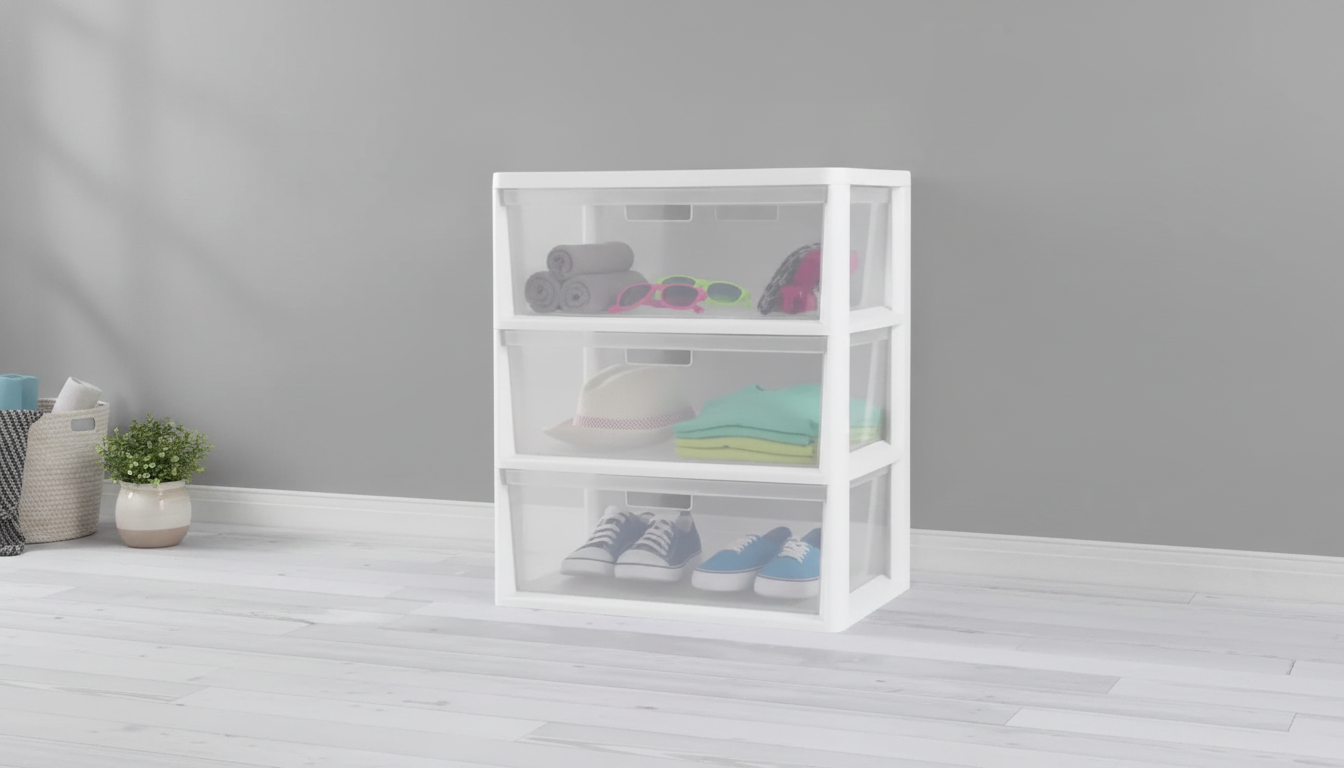
A wide storage tower with pull-out drawers and portable bins makes it easier to keep everyday items visible, separated, and ready to grab. When “stuff” keeps migrating from room to room—mail on the counter, hair tools on the vanity, craft supplies on the floor—drawer-based storage creates a simple reset path: open, drop, close. Below are practical use cases, what to look for before you place one, and easy ways to keep the system running smoothly. For more guidance, see Veemoon 4-Layer Plastic Storage Drawers.
Why a wide drawer tower works when clutter keeps coming back
- It creates dedicated “homes” for frequently used items so they stop drifting across countertops, tables, and floors.
- A wider footprint holds bulkier categories—think craft kits, cleaning refills, kids’ gear—without stacking multiple smaller organizers.
- Portable bins let you carry an entire category (like hair tools or art supplies) to the spot where it’s used, then return it in one trip.
- Drawer-style access reduces the need to unstack containers just to reach what’s behind them, which means fewer abandoned piles mid-task.
Best places to use a 3-drawer wide storage tower
A three-drawer tower is flexible because it can handle “daily,” “weekly,” and “backup” storage in one compact zone. For further reading, see Systainers?.
- Bedroom or closet: socks, belts, accessories, seasonal items, and small toiletries.
- Nursery or kids’ room: diapers, wipes, creams, bibs, small toys, and art supplies.
- Laundry area: stain removers, lint rollers, detergent pods, dryer sheets, and sewing fixes.
- Home office: cables, adapters, stationery, label maker supplies, and paper accessories.
- Craft corner: paint, brushes, glue, vinyl tools, beads, and scrapbooking extras.
What “portable bins” add to everyday organization
- Supports task-based storage: keep one bin per routine—mail sorting, charging, grooming, or homework supplies—so you’re not hunting across drawers.
- Improves reset speed: bins lift out for refills, quick cleanups, or swapping seasonal items without emptying the entire tower.
- Encourages consistent sorting: when each bin represents one category, it naturally returns to the same drawer position.
- Reduces spillover: a full bin is a clear signal to declutter, split the category, or move backstock elsewhere—before it becomes a messy overflow.
Quick-fit checklist before placing it in a room
- Measure width and depth: confirm drawers can open fully without hitting doors, hampers, or nearby furniture.
- Match placement to the routine: near the laundry basket, beside the desk, or next to the changing table beats “where it fits.”
- Plan categories first: assign drawers with intention and avoid mixing unrelated items that make cleanup harder.
- Put the most-used drawer at waist height: quick access reduces drops, spills, and that “I’ll deal with it later” pile.
Room-by-room setup ideas (simple drawer maps)
If you want a system that sticks, start with three categories that match how the room is actually used—then label the bins or drawer fronts in plain language (not “misc.”).
Fast drawer maps you can copy
Sample drawer plan for common routines
Sample drawer plan for common routines
| Location |
Top Drawer |
Middle Drawer |
Bottom Drawer |
| Laundry area |
Stain tools, measuring scoop, lint roller |
Detergent pods, dryer sheets, scent boosters |
Sewing kit, spare buttons, delicates bags |
| Home office |
Pens, sticky notes, small tape |
Chargers, adapters, batteries (in a bin) |
Files, labels, envelopes, stamps |
| Nursery |
Diapering essentials (grab-and-go bin) |
Bibs, burp cloths, ointments |
Small toys, books, spare linens |
Care and maintenance for long-term use
- Wipe bins and drawer surfaces regularly: mild soap and water is typically enough for everyday residue; follow basic cleaning and disinfecting guidance as needed (see CDC cleaning and disinfecting recommendations).
- Avoid overloading drawers: if glides start sticking, it often signals too much weight or a snagged item (like a cord or fabric edge).
- Use small dividers inside bins: hair ties, clips, screws, and batteries stay put instead of migrating to corners.
- Do a monthly category check: remove duplicates, toss empties, and relocate items that no longer match the room’s routine.
For plastic bins and drawers, gentle cleaning methods help prevent clouding and scratches; the American Cleaning Institute offers general best practices for cleaning household materials.
When to choose a wide tower instead of stacking smaller organizers
If you want a compact organizer that can move between routines—desk time, vanity time, laundry time—the 3-Drawer Wide Storage Tower with Portable Bins is designed for flexible sorting with three drawers and removable bins. It’s a practical option for quick category storage without installing shelves or committing to built-ins. Current listing: $33.51 (in stock).
FAQ
What should go in the top drawer versus the bottom drawer?
Put the most-used items in the top drawer so they’re easy to grab and put back. Use the bottom drawer for heavier, bulkier, or backup supplies to help keep the unit stable and reduce daily bending.
Are portable bins better than fixed dividers?
Portable bins are ideal for routines that move—grooming, homework, and crafting—because you can carry the whole category and return it fast. Fixed dividers are better when items always stay in one place and need stricter separation.
How can drawers be kept from turning into a mixed catch-all?
Stick to one category per drawer, then add a small bin or divider for tiny items so they don’t drift. A quick 5-minute weekly reset—returning strays to the correct drawer—prevents the slow buildup.
Recommended for you








Leave a comment